
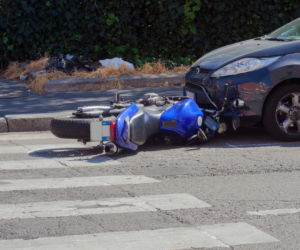
Motorcycle accidents are among the most physically devastating events a person can survive. Unlike car accidents — where a steel frame, airbags, and a seatbelt absorb much of the impact — motorcyclists have almost no barrier between their body and the road. The result is a category of injury that is often more severe, more complex, and more likely to produce long-term consequences than injuries from other types of vehicle accidents.
If you’ve been in a motorcycle crash in the Tampa Bay area, getting the right treatment quickly isn’t just about pain relief — it’s about protecting your long-term health, your ability to function, and in many cases, your legal claim. At Total Vitality Medical Group, we treat motorcycle accident victims across Clearwater, Tampa, St. Petersburg, and Brandon, and we understand what these injuries actually look like and what they actually require.
Here’s what you need to know.
Why Motorcycle Accident Injuries Are Different
The physics of a motorcycle crash are unforgiving. When a rider goes down, the body absorbs energy that a car would distribute across its frame. That energy has to go somewhere — and it goes into the rider’s spine, joints, muscles, and soft tissue.
Several factors make motorcycle injuries uniquely serious:
Direct impact with the road or another vehicle. There is no crumple zone, no door panel, no dashboard. Riders frequently make direct contact with pavement, guardrails, other vehicles, or fixed objects at speed.
Ejection and projectile forces. Being thrown from a motorcycle creates a combination of rotational, compressive, and shear forces on the spine and joints that are rarely seen in standard car accidents. These forces can cause injuries across multiple spinal levels simultaneously.
Road rash and secondary trauma. The physical act of sliding across pavement creates significant trauma to the skin, muscles, and underlying tissue that compounds the primary musculoskeletal injuries.
Adrenaline masking symptoms. One of the most dangerous aspects of any accident injury — and especially motorcycle accidents — is that adrenaline and shock can mask pain for hours or even days after the crash. Riders who feel relatively okay at the scene often begin experiencing severe symptoms 24 to 72 hours later. By the time the symptoms become undeniable, inflammation has set in and early treatment windows have closed.
Delayed soft tissue injury presentation. Whiplash, herniated discs, and ligament damage frequently don’t show up on initial emergency imaging. A rider can leave the ER with a clean CT scan and still have significant soft tissue injuries that will cause months of pain and dysfunction if left untreated.
The Most Common Motorcycle Accident Injuries We Treat
Spinal Injuries
The spine is one of the most commonly injured structures in motorcycle accidents. Direct impact, ejection, and the sudden deceleration of a crash all create compressive and shear forces on the vertebrae and discs. Common spinal injuries include:
- Herniated or bulging discs — The discs between vertebrae can rupture or bulge under the force of impact, pressing on nearby nerve roots and causing pain, numbness, or tingling that radiates into the arms or legs.
- Vertebral fractures — Compression fractures are common in high-impact crashes, particularly in the thoracic and lumbar spine.
- Spinal misalignment and subluxation — The force of a crash can knock vertebrae out of alignment, creating nerve pressure and restricted joint motion that persists long after the accident.
- Facet joint injury — The small joints between vertebrae are vulnerable to damage from rotational and compressive forces.
Neck Injuries (Cervical Spine)
Whiplash and cervical strain are extremely common in motorcycle accidents, even when the rider is wearing a helmet. The sudden deceleration of impact snaps the head forward and back, straining or tearing the muscles, ligaments, and soft tissue of the cervical spine. Symptoms include neck pain and stiffness, headaches, shoulder pain, jaw pain, and cognitive symptoms like brain fog or difficulty concentrating.
Shoulder Injuries
Riders instinctively extend their arms to brace for impact, which transfers enormous force through the wrists, elbows, and shoulders. Rotator cuff tears, AC joint separations, clavicle fractures, and brachial plexus injuries are all common outcomes of motorcycle crashes.
Hip and Pelvis Injuries
Direct impact with the ground or another vehicle frequently injures the hip, pelvis, and sacroiliac joints. These injuries can affect gait, posture, and spinal alignment long after the acute pain subsides.
Knee and Lower Extremity Injuries
The lower body is highly exposed in a motorcycle crash. Knee ligament damage, meniscal tears, ankle sprains, and tibial fractures are common — and when these injuries affect how you walk and bear weight, they create compensatory strain throughout the entire kinetic chain, including the hips and lower back.
Soft Tissue Injuries
Muscle tears, ligament sprains, and contusions throughout the body are almost universal in motorcycle crashes. These injuries may not show up on imaging but can cause significant pain, restricted movement, and functional limitation for months without proper treatment.
Why Chiropractic Care Is Essential After a Motorcycle Accident
Emergency care after a motorcycle accident addresses life-threatening injuries — fractures, internal bleeding, head trauma. What it does not address is the musculoskeletal damage that will define your recovery over the next weeks, months, and potentially years.
Chiropractic care is specifically designed for exactly this type of injury.
After a motorcycle crash, the spine is frequently misaligned at multiple levels. Joints are restricted. Nerves are compressed. The body begins laying down scar tissue and adopting compensatory movement patterns almost immediately. Left uncorrected, these structural problems become chronic.
Chiropractic adjustments restore spinal alignment, decompress affected nerve roots, and restore joint mobility. For disc injuries, targeted chiropractic techniques reduce pressure on the affected disc and surrounding nerve tissue. For soft tissue injuries, manual therapies accelerate healing and prevent the formation of restrictive scar tissue.
Critically, beginning chiropractic care early — ideally within the first few days after a crash — produces significantly better outcomes than waiting until symptoms become severe. The longer structural problems go uncorrected, the more the body adapts around them, and the harder those adaptations are to reverse.
Why Physical Therapy Is Essential After a Motorcycle Accident
Chiropractic care corrects the structural problem. Physical therapy rebuilds the functional capacity that the injury took away.
Motorcycle accident injuries typically produce significant muscular weakness, imbalance, and movement dysfunction. When you’ve been in a crash, your body immediately begins protecting injured areas by guarding — tightening the surrounding muscles and limiting movement. This protective response is appropriate in the short term but becomes deeply counterproductive if it persists. The muscles stay tight, movement patterns become dysfunctional, and the body compensates in ways that create new pain and injury.
Physical therapy systematically reverses this process. A PT program after a motorcycle accident typically includes:
- Therapeutic exercises to rebuild strength and stability in injured areas
- Manual therapy to address soft tissue restriction and myofascial tension
- Neuromuscular re-education to retrain movement patterns altered by injury
- Range of motion restoration for injured joints
- Functional movement training to return you to daily activities and, where applicable, riding
- Balance and proprioception work, particularly important after lower extremity injuries
For riders with road rash, PT also addresses the scar tissue that forms as skin and underlying tissue heals — scar tissue that, if left unmanaged, can restrict movement and cause ongoing discomfort.
The Case for Combining Both
At Total Vitality Medical Group, we treat motorcycle accident patients with a coordinated chiropractic and physical therapy approach — and the outcomes are meaningfully better than either treatment alone.
Here’s why: chiropractic care restores the structural foundation. Physical therapy builds the muscular support that holds that foundation in place. Without PT, patients tend to lose their chiropractic corrections as weakened muscles allow the same misalignments to recur. Without chiropractic care, PT works on a structurally compromised foundation, limiting what’s possible and increasing the risk of re-injury.
When both are coordinated by a team that communicates — which is what happens when your chiropractor and physical therapist work in the same clinic — treatment is sequenced intentionally. Adjustments and PT sessions reinforce each other rather than working in isolation.
We also integrate primary care when needed — for pain management, imaging referrals, medication, and documentation that may be critical for your insurance claim or legal case.
Florida Law and Motorcycle Accident Injuries — What You Need to Know
Florida’s no-fault insurance law (Personal Injury Protection, or PIP) does not apply to motorcycles. This is a critical distinction that many riders don’t know until after an accident.
Because motorcyclists are excluded from PIP, your treatment options depend on:
- Your health insurance — Standard health insurance typically covers accident-related injuries.
- Medical payments coverage (MedPay) — An optional add-on to motorcycle insurance policies that covers medical expenses regardless of fault.
- The at-fault driver’s liability insurance — If another driver caused the accident, their liability coverage may cover your medical treatment.
- A personal injury claim — If you are pursuing legal action, medical documentation of your injuries is essential from day one.
Total Vitality Medical Group works with patients on letters of protection (LOP) for those pursuing personal injury claims — meaning you can begin treatment immediately without upfront payment, with medical costs addressed from your settlement. If you were injured in a motorcycle accident and aren’t sure how to cover your treatment, call us and we’ll walk you through your options.
Don’t Wait to Get Treated
The two most common mistakes motorcycle accident victims make are waiting to see if the pain goes away on its own, and assuming a clean ER report means they weren’t seriously injured.
Soft tissue injuries don’t show up on X-rays or CT scans. Disc injuries and spinal misalignment can exist alongside a clean emergency imaging report. And the longer musculoskeletal injuries go untreated, the more the body adapts around them — making recovery longer, harder, and less complete.
If you were in a motorcycle crash in the Tampa Bay area, get evaluated as soon as possible. You don’t need a referral to be seen at Total Vitality Medical Group, and our team will document your injuries thoroughly from the first visit.
- Clearwater: 26750 US Hwy 19 N #100 — (727) 726-1460
- St. Petersburg: 1001 37th Street N, Suite D — (727) 914-9130
- Brandon: 667 West Lumsden Road — (813) 867-7323
- Tampa: 1881 W Kennedy Blvd, Suite A — (813) 579-1212
Contact us today to schedule your post-accident evaluation. Same-day and next-day appointments are available.
About the Author: Dr. Adam Rosoff, DC

