
Back and neck pain are among the most common—and most undertreated—conditions veterans bring home from service. Whether it developed from years of carrying heavy gear, a training injury, a vehicle accident, or the cumulative physical toll of active duty, chronic spinal pain doesn’t have to be something you just live with.
At Total Vitality Medical Group, we work with veterans across Tampa Bay who are dealing with exactly these kinds of injuries. Many don’t know how much treatment is available to them, or that the VA may cover that care closer to home than they think. This post breaks down what causes service-related back and neck injuries, what your treatment options look like, and how to access care.
Why Back and Neck Injuries Are So Common Among Veterans
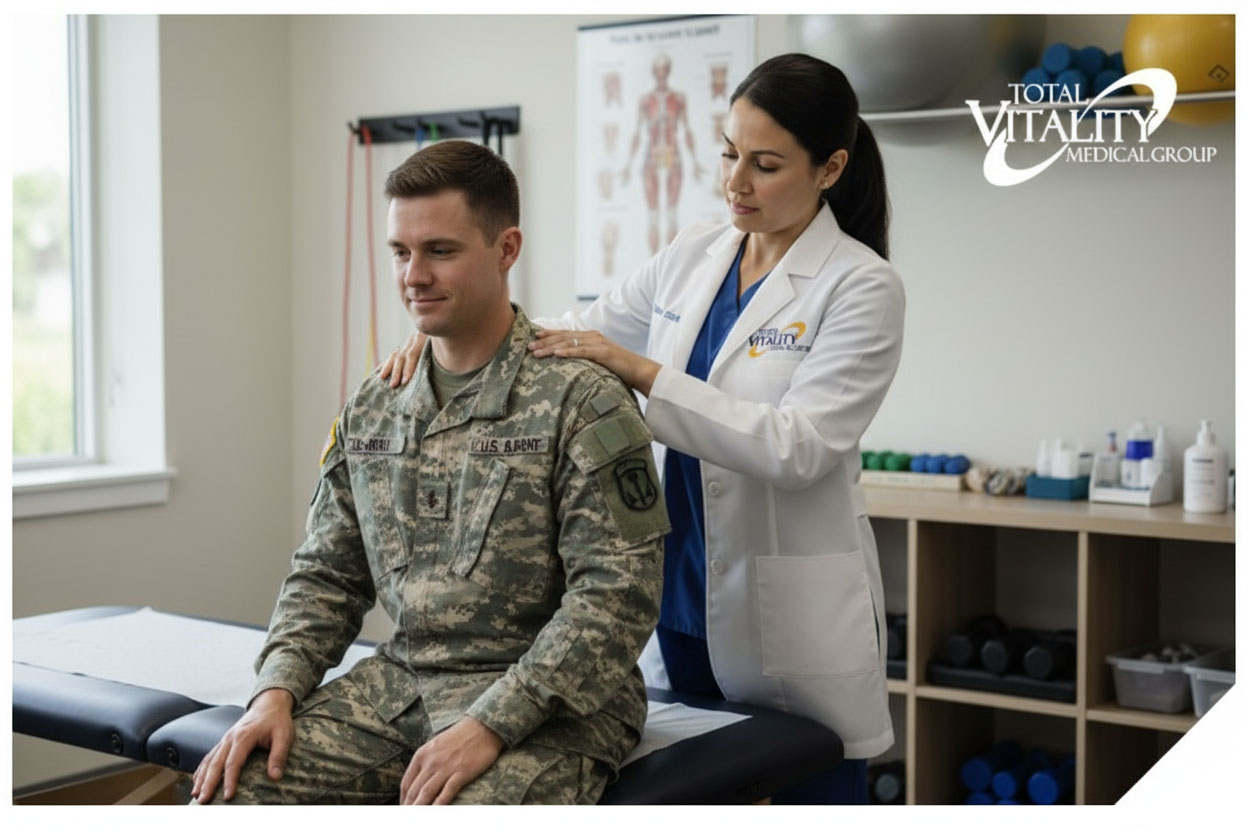
Military service puts extraordinary physical demands on the body—often over many years. Several factors contribute to the high rate of spinal injuries in the veteran population.
Load-Bearing and Repetitive Strain
Carrying heavy packs, body armor, and equipment for extended periods places significant compressive force on the spine. Over time, this leads to disc compression, muscle imbalances, and chronic strain in both the cervical (neck) and lumbar (lower back) regions.
Vehicle and Blast-Related Trauma
Military vehicle accidents, IED blasts, and parachute landings create sudden, high-impact forces that can cause herniated discs, vertebral fractures, and soft tissue injuries. These often don’t produce immediate symptoms but lead to progressive pain years later.
Postural and Occupational Demands
Prolonged sitting in aircraft or vehicles, sleeping on irregular surfaces, and the physical demands of specific military occupational specialties (MOS) all contribute to cumulative spinal wear.
Delayed Symptom Onset
Many service-related spinal injuries don’t produce significant pain until years after the initial trauma. Veterans who felt fine at discharge often begin experiencing worsening back or neck pain in their 30s, 40s, and 50s as the structural damage catches up with them.
Common Service-Related Back and Neck Conditions
Herniated or Bulging Discs
The discs between your vertebrae act as shock absorbers. High-impact trauma or years of compression can cause these discs to bulge or rupture, pressing on nearby nerves and causing pain, numbness, or tingling that can radiate down the arms or legs (often called radiculopathy).
Degenerative Disc Disease
Repeated stress on the spine accelerates the natural breakdown of spinal discs. Veterans often develop degenerative disc disease earlier than the general population due to the physical demands of service.
Cervical Strain and Whiplash
Neck injuries from vehicle accidents, hard landings, or blast concussive forces can damage the muscles, ligaments, and joints of the cervical spine. Symptoms include neck stiffness, headaches, shoulder pain, and reduced range of motion.
Lumbar Strain and Facet Joint Syndrome
The lower back takes the brunt of load-bearing activity. Chronic lumbar strain and irritation of the facet joints (the small joints between vertebrae) are extremely common in veterans and can cause persistent aching, stiffness, and pain with movement.
Spinal Stenosis
Prolonged spinal stress can accelerate narrowing of the spinal canal, compressing the spinal cord or nerve roots. This often causes pain, weakness, and numbness that worsens with standing or walking.
Sciatica
When nerves in the lower back are compressed—often from a herniated disc or stenosis—pain can radiate down through the buttock and into one or both legs. Sciatica is one of the most commonly reported musculoskeletal complaints in the veteran population.
Treatment Options at Total Vitality Medical Group
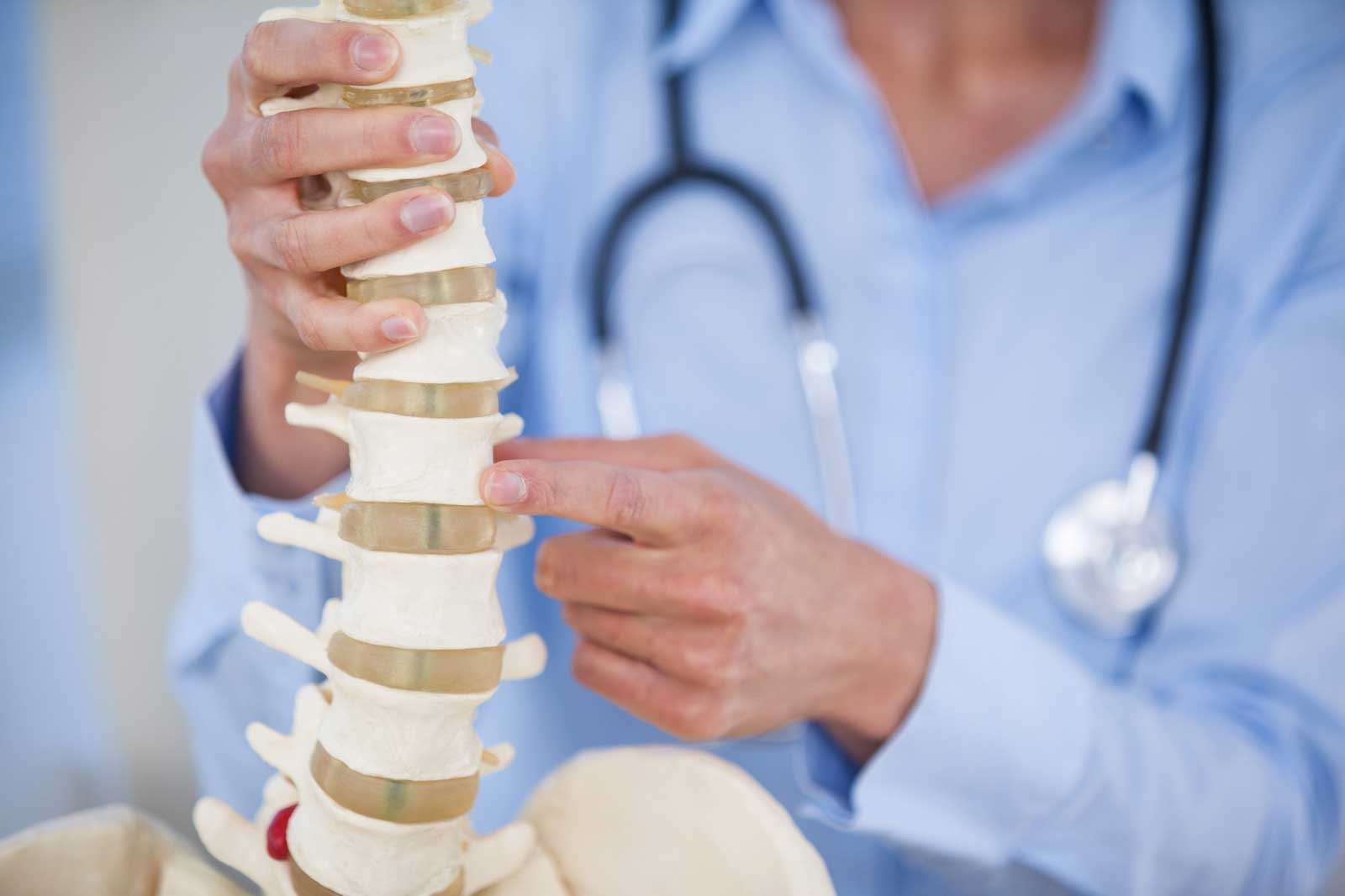
One of the biggest advantages of care at Total Vitality Medical Group is that multiple treatment disciplines work together under one roof. For veterans with spinal injuries, that coordinated approach makes a significant difference.
Chiropractic Care
Chiropractic treatment addresses the structural root causes of spinal pain—misalignment, restricted joint mobility, and nerve irritation—through targeted spinal adjustments and manual therapies. For veterans with disc problems, facet joint pain, or chronic cervical and lumbar strain, chiropractic care can restore mobility, reduce pain, and slow the progression of degenerative changes.
Our chiropractic physicians work with veterans to develop treatment plans that account for the full history of their injuries, not just current symptoms.
Physical Therapy
Physical therapy focuses on rebuilding the strength, flexibility, and stability that protect the spine from further injury. For veterans, this is particularly important because years of physical demand often leave significant muscular imbalances that continue to stress the spine long after service ends.
A personalized physical therapy program may include:
- Therapeutic exercises
- Manual therapy
- Postural correction
- Functional movement training tailored to your specific injury and goals
Primary Care Integration
Managing spinal pain often involves more than chiropractic care and physical therapy alone. Our primary care providers work alongside our chiropractic and physical therapy teams to address pain management, medication needs, referrals, and any underlying conditions that may be contributing to your symptoms.
This integrated model means your care is coordinated—not siloed between providers who don’t communicate.
Diagnostic Imaging and Evaluation
Before treatment begins, a thorough evaluation helps identify the specific structural causes of your pain. We work with diagnostic imaging to ensure your treatment plan is based on an accurate picture of what’s happening in your spine.
Does the VA Cover This Treatment?
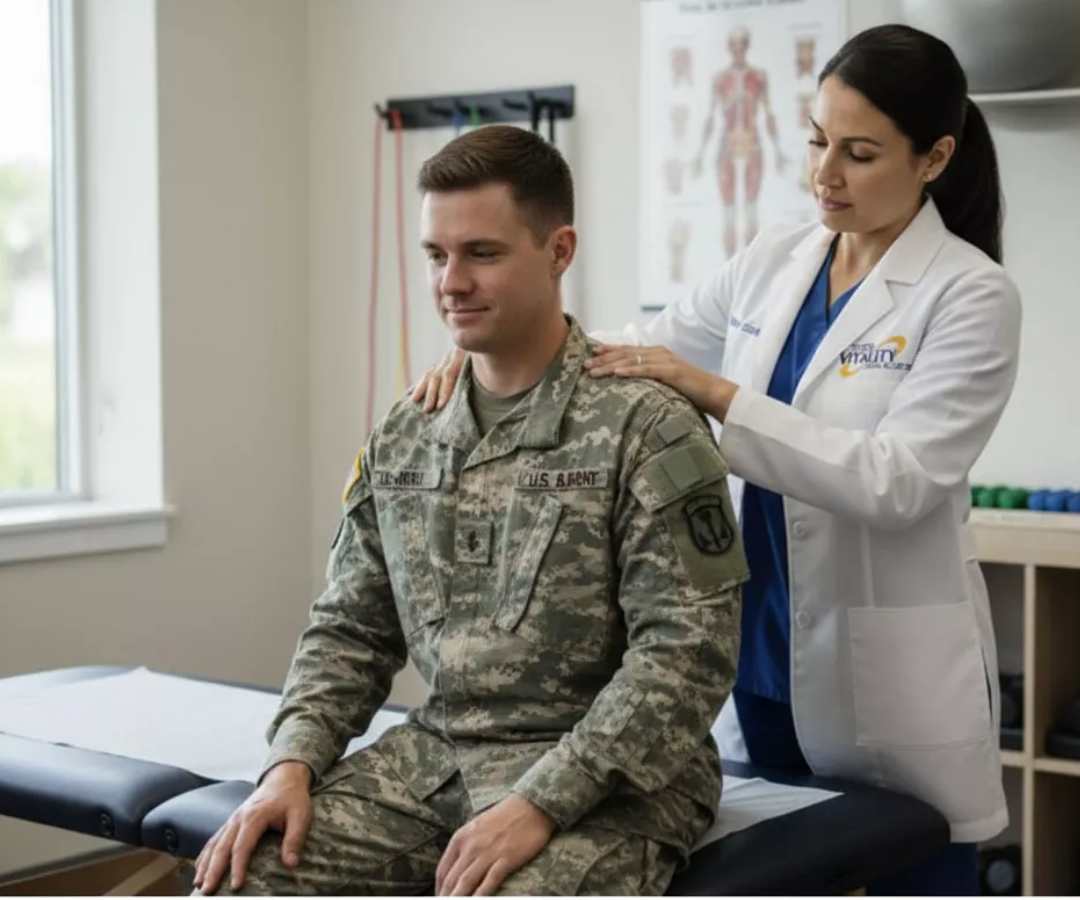
In many cases, yes—through the VA Community Care Program.
The VA Community Care Network allows eligible veterans to receive chiropractic care and physical therapy at approved private clinics when VA facilities have long wait times, don’t offer the service locally, or when the veteran lives a significant distance from a VA medical center. Total Vitality Medical Group is a VA-approved provider, and care received through Community Care is covered the same way it would be at a VA facility—often with no out-of-pocket cost.
To access Community Care, you’ll need to:
- Be enrolled in VA health care.
- See your VA primary care provider and describe your symptoms.
- Request a referral to a community provider for chiropractic care or physical therapy.
- Receive authorization from the VA Community Care office.
- Schedule your appointment with us once authorization is approved.
If you’re not yet enrolled in VA health care, you can apply at va.gov/health-care/how-to-apply or call 1-877-222-8387.
For a full breakdown of how Community Care works, read our post:
How Veterans Can Access Chiropractic and Physical Therapy Through the VA Community Care Program
You Don’t Have to Keep Managing Pain on Your Own
Service-related back and neck injuries are real, documented, and treatable. The fact that your pain may have developed gradually—or years after your service—doesn’t make it any less legitimate, and it doesn’t mean you’re out of options.
Total Vitality Medical Group has four locations across Tampa Bay serving veterans in Clearwater, Tampa, St. Petersburg, and Brandon. Our team understands the unique injury patterns that come with military service, and we’re equipped to provide the coordinated, multidisciplinary care those injuries often require.
Our Locations
- Clearwater: 26750 US Hwy 19 N #100 • (727) 726-1460
- St. Petersburg: 1001 37th Street N, Suite D • (727) 914-9130
- Brandon: 667 West Lumsden Road • (813) 867-7323
- Tampa: 1881 W Kennedy Blvd, Suite A • (813) 579-1212
Contact us today to schedule an evaluation or learn more about your VA coverage options.
About the Author: Dr. Adam Rosoff, DC

